Protect Yourself
10 Bathroom Remodel Contractor Red Flags (and How to Respond)
The warning signs that separate a trustworthy bathroom remodeler from a costly mistake — large deposits, cash-only, no permits, no license, and more.
Sources CSLB · FTC · BBB
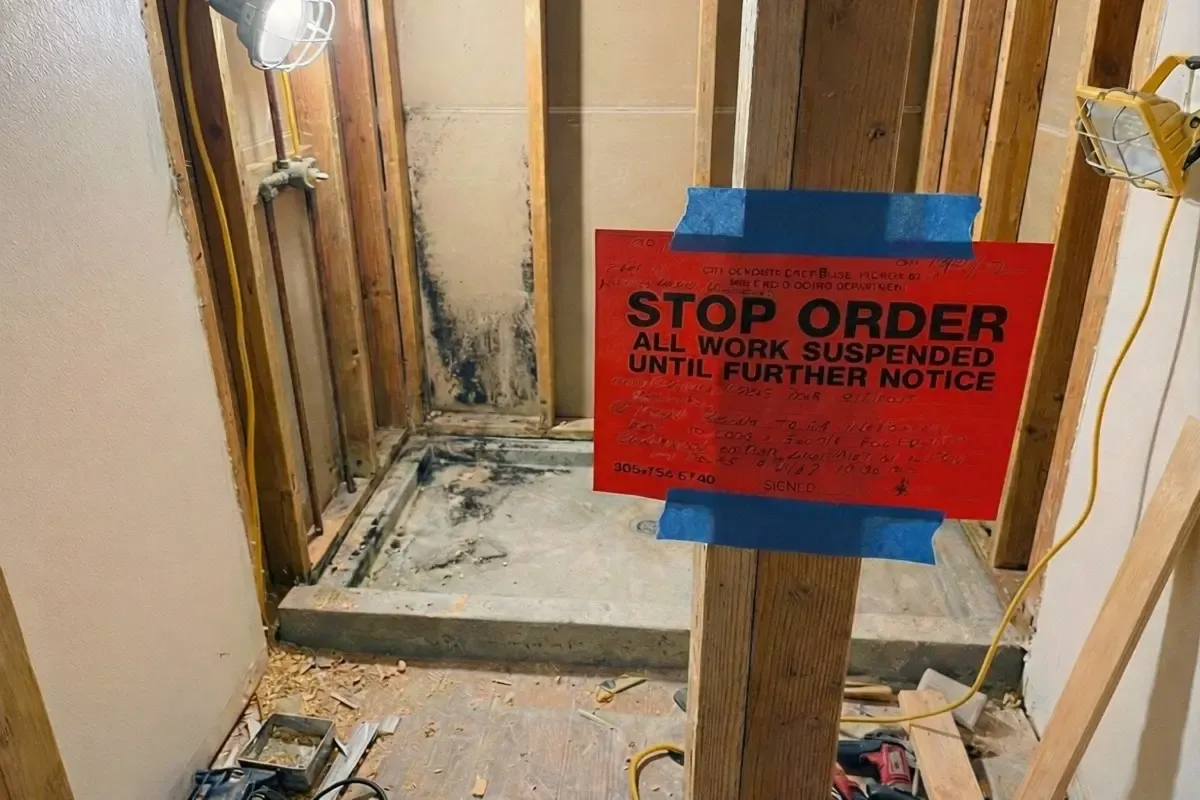
Most bathroom remodels go fine. The ones that don’t usually showed warning signs early. Here are the red flags worth walking away over.
A fair price is still fair next week. Urgency is a sales tactic, not a discount.
1. A large upfront deposit
In California, the down payment on a home-improvement contract cannot exceed $1,000 or 10% of the contract price, whichever is less (CSLB) — outside a narrow exception for contractors carrying a qualifying blanket performance-and-payment bond. A contractor asking for a large upfront deposit is shifting the risk onto you.
California payment rule: Beyond the down-payment cap, each progress payment shouldn't exceed the value of the work already completed or materials already delivered. Keep every payment tied to finished work you can verify — and never pay in cash. A large upfront deposit combined with cash-only pricing is one of the most common ways homeowners lose money to a bad remodeler.
2. Cash-only
Cash-only pricing kills your paper trail and your chargeback protection. The FTC lists asking to be paid entirely up front, or only in cash, among the behaviors that mark a home-improvement scam (FTC). Pay in a way that’s traceable, on a written schedule tied to milestones.
3. No written contract
Everything — scope, materials, price, timeline, payment schedule — belongs in a signed contract. A blank or verbal agreement is the easiest way to get surprised later.
4. No license
In California, verify the license on the CSLB website before you sign, and report unlicensed activity if someone is working without one. Our vetting guide shows exactly how to check.
5. No insurance
A contractor without general liability and workers’ compensation coverage pushes the risk of on-site injuries and damage back toward you. California requires licensed contractors to carry workers’ compensation or file a valid exemption with CSLB — and several classifications must carry it whether or not they have employees (CSLB). Ask for current certificates for both coverages and verify them.
6. “We can skip the permit”
Permit avoidance signals an unlicensed or uninsured operator — and it can stall a future home sale. Most full bathroom remodels require a permit, depending on the work performed; treat “no permit needed” as a warning, not a savings.
7. Door-to-door or “leftover materials” pitches
Unsolicited offers and “I have leftover tile from a nearby job” pressure pitches are a classic scam pattern (BBB).
8. High-pressure urgency
“This price is only good today” exists to stop you from getting a second opinion. A fair price is still fair next week.
9. Won’t provide references
A contractor proud of their work will gladly share recent clients. Refusal — or only very old references — is a flag.
10. A suspiciously low bid
A bid far below the others usually isn’t a gift. The FTC’s advice is blunt: don’t automatically choose the lowest bidder, and ask for an explanation when there’s a big difference between estimates (FTC). Lowball numbers are frequently recovered later through change orders or scope quietly left out — which is exactly why every change belongs in writing, with its price change stated, before the work continues (CSLB). Compare bids line by line.
Seeing one of these doesn’t always mean fraud — but it means slow down, get it in writing, and verify. Start with how we vet contractors.